

Blog Posts
To Mat or Not to Mat: Choosing the Right Frame Style
A practical guide to choosing between matted and full-bleed framing based on artwork size, room style, print sizing, visual impact, and long-term presentation.
 Apr 22, 20266 min read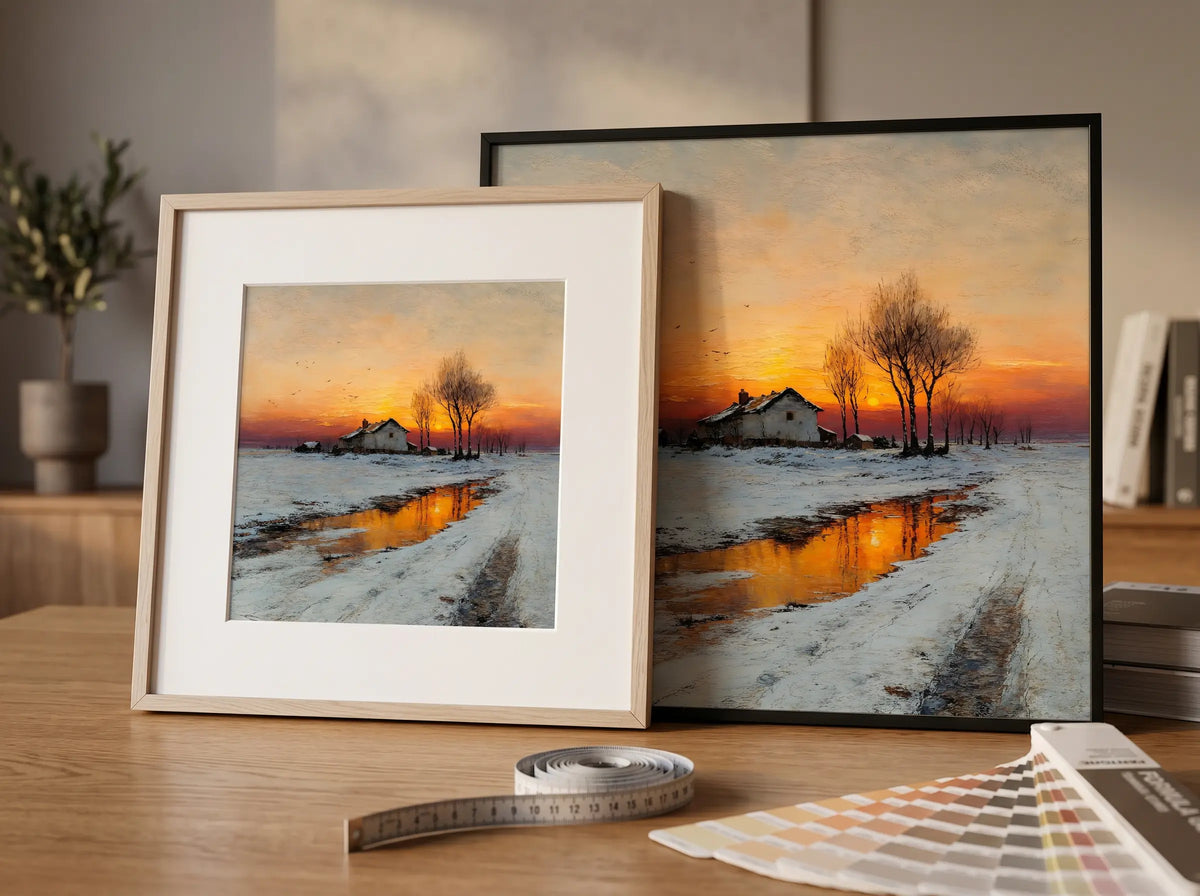
On this page
Mat or No Mat? The Quick Answer
Use a mat when you want more breathing room, a classic gallery presentation, or extra visual presence for a smaller print. Skip the mat when you want a bolder, more modern edge-to-edge look, especially for larger statement pieces.
Matting creates breathing room. Full-bleed framing creates impact.
You found the right fine art print, chose the wall, and found a frame. Then comes the sizing question: should the artwork sit behind a mat board, or should it fill the frame edge to edge?
Neither option is automatically better. The right choice depends on the artwork, room style, frame size, and the visual mood you want to create.

What Exactly Is a Mat Board?
A mat board is a rigid paper-based board with a window cut into the center. It sits inside the frame between the artwork and the glazing, creating a visible border around the print.
Matting has both a practical and visual role. It can help keep the print surface separated from the glazing, while also changing the scale, calmness, and perceived formality of the presentation. For long-term display, use framing materials intended for artwork rather than low-quality decorative board.

Matted vs. Full-Bleed Framing
| Feature | Matted Frame | Full-Bleed Frame |
|---|---|---|
| Visual feeling | Calm, refined, gallery-like | Bold, modern, immersive |
| Often works well for | Smaller prints, quiet compositions, classic interiors | Large prints, graphic work, modern interiors |
| Print-size rule | Match the mat window | Match the frame opening |
| Wall footprint | Larger because the mat adds border space | More of the frame area is occupied by the image |
Why Use a Mat?
A mat creates intentional quiet around the image. That negative space can help the eye transition from the room to the artwork and can make a smaller print feel more substantial on the wall.
- For a more formal presentation: matting can give works on paper a collected, gallery-like feeling.
- For smaller artwork: a wider mat can give a small print more physical presence without enlarging the image itself.
- For visually busy rooms: the border can create a calmer transition between the decor and the artwork.
- For coordinated gallery walls: consistent mat proportions can help different artworks feel related.

Why Go Full Bleed?
With full-bleed framing, the artwork fills the frame opening without a visible mat border. The presentation feels more direct and gives more of the available frame area to the image.
- For modern rooms: edge-to-edge art can feel clean and architectural.
- For larger pieces: removing the mat can keep the total framed dimensions more manageable.
- For bold artwork: abstracts, typography, graphic prints, and photography can benefit from a more immediate presentation.
- For maximum image presence: the artwork occupies more of the frame opening.

How Matting Changes Print Size
If you are printing digital downloads, pay attention to the mat window rather than assuming the size printed on the frame package is the artwork size.
- With a mat: print the artwork to fit the mat window. A 16×20 frame with an 11×14 mat window generally needs an 11×14 print.
- Without a mat: print the artwork to fit the frame opening. A 16×20 frame used without its mat generally needs a 16×20 print.
- Check the aspect ratio: the print file must match the opening you intend to fill. Our aspect ratio guide can help you confirm the correct proportions.
The mat window determines the print size. The outer frame determines the wall footprint.

Common Framing Mistakes
Printing for the outer frame instead of the mat window
If a frame includes a mat, the visible opening may be much smaller than the outer frame dimensions. Measure the window before ordering the print.
Using poor-quality mat board
For artwork you intend to keep, choose matting and backing materials intended for art display rather than assuming every decorative mat has the same long-term properties.
Making large art physically oversized
A wide mat around a large print can increase the total frame dimensions significantly. Check the wall footprint before committing to the frame.
Choosing a mat that feels too narrow
A very narrow border can look accidental. Judge mat width in proportion to both the artwork and the frame rather than using a single fixed rule.
Ignoring the artwork itself
Room style matters, but the image should lead the decision. Quiet compositions may benefit from space around them; graphic work may feel stronger with a more immediate edge-to-edge presentation.
Where Each Style Works Best
| Situation | Consider | Why |
|---|---|---|
| Small print | Mat | Adds breathing room and overall presence |
| Large 24×36 statement piece | Full bleed | Keeps the frame footprint more controlled |
| Classic or collected room | Mat | Supports a more formal presentation |
| Modern or minimal room | Full bleed | Creates a cleaner, more direct look |
| Mixed gallery wall | Either | Consistency can come from frame color, spacing, or layout instead of identical matting |


Frequently Asked Questions
What is a mat board in framing?
A mat board is a rigid board with a window cut into the center. It creates a visible border around the artwork and can help separate the print surface from the glazing.
Should I mat my art print?
Use a mat when you want more breathing room, a more formal gallery presentation, or more overall presence for a smaller print. Skip it when you want a more direct edge-to-edge presentation or need to keep the total frame size smaller.
What size print do I need for a matted frame?
Match the print to the mat window, not automatically to the outer frame size. For example, a 16×20 frame with an 11×14 mat opening generally takes an 11×14 print.
Is full-bleed framing better for large art?
It can be a strong choice because it gives more of the frame opening to the image and avoids adding the extra width of a mat. The best choice still depends on the artwork and the desired presentation.
Choose Breathing Room or Impact
There is no universal right answer. A mat creates more visual separation around the artwork; full-bleed framing gives the image more immediate presence. Start with the artwork, then consider the room, the final frame dimensions, and how much visual space you want around the image.
For more framing decisions, explore Art Academi's best-selling fine art prints and related Journal guides.
Art worth living with


