

Blog Posts
The Hygroscopic Dilemma: How Fine Art Responds to Humidity
A straightforward guide to protecting your artwork from humidity damage.
 Apr 22, 20266 min read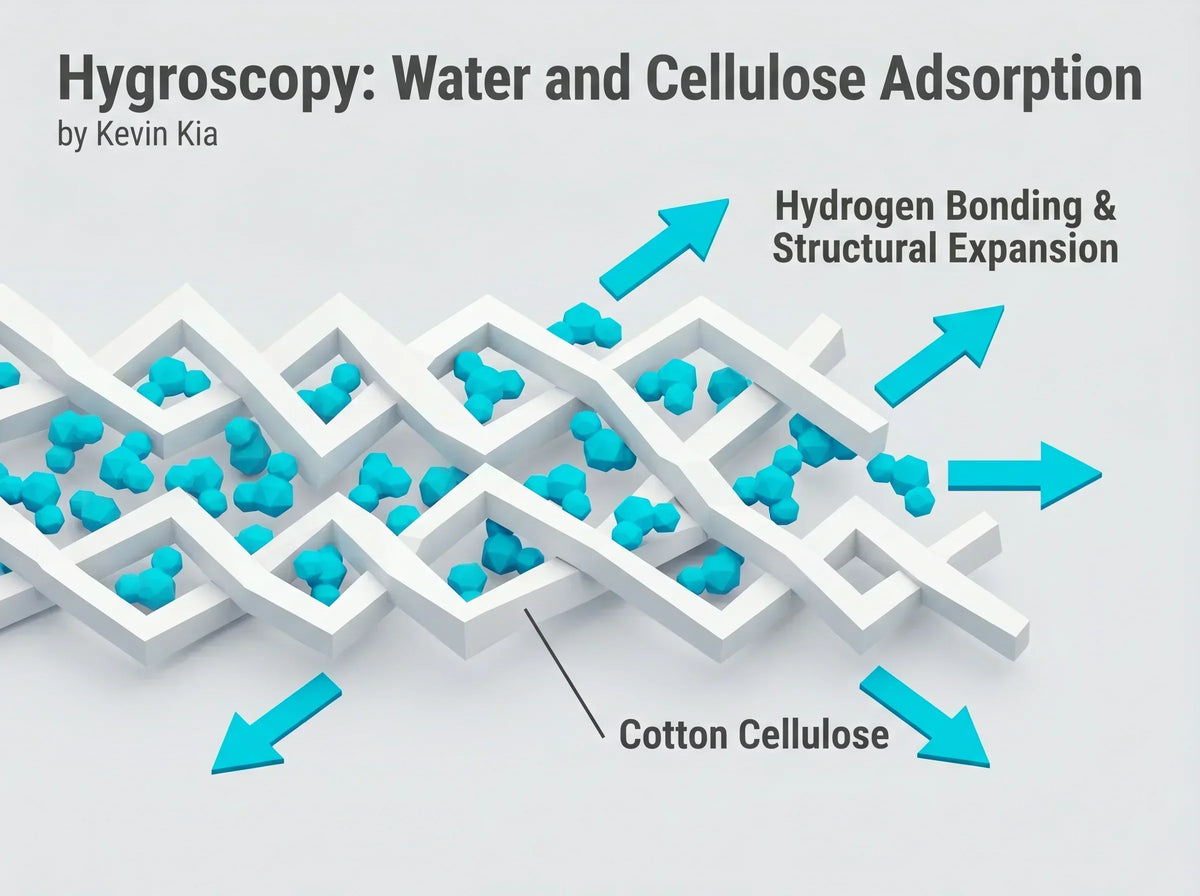
On this page
Fine art paper is hygroscopic: it absorbs and releases moisture as the surrounding air changes. That natural response can alter the dimensions of a print, and poor mounting or unstable display conditions can turn those small movements into waves, ripples, or cockling.
For collectors, the practical goal is not to stop paper from responding to its environment. It is to give the print a stable climate and enough freedom inside the frame to expand and contract without being forced out of plane.
Quick guide to protecting fine art from humidity
- Keep humidity stable: avoid rapid swings and prolonged damp conditions.
- Aim for a moderate indoor range: roughly 45–55% relative humidity is a useful residential target when it can be maintained consistently.
- Avoid high-moisture locations: unsealed paper art is a poor choice for full bathrooms, damp walls, and areas exposed to condensation.
- Do not rigidly trap the sheet: archival mounting should allow paper to move rather than binding every edge.
- Use suitable glazing and framing: glazing can slow environmental exchange, while good frame construction helps keep the print physically protected.

Which art materials are most vulnerable to humidity?
Different substrates react differently to moisture. The exact response depends on material composition, construction, coatings, mounting, and the speed and magnitude of environmental change.
| Material | Humidity sensitivity | Typical concern |
|---|---|---|
| Unsealed canvas | High | Fabric tension can change as the environment changes, potentially contributing to sagging or distortion. |
| Economy poster paper | High | Thin or poorly mounted sheets can cockle or ripple when moisture changes unevenly. |
| 100% cotton rag fine art paper | Moderate | A substantial conservation-oriented substrate, but still cellulose-based and therefore responsive to moisture. |
For more on the substrate itself, see our guide to 100% cotton rag paper.
Why paper expands when humidity rises
Cotton rag and other papers are built largely from cellulose. Cellulose is hydrophilic, so water molecules in the surrounding air can associate with the fiber structure. As moisture content changes, the sheet can change dimension as well.
During humid periods, paper can take on moisture and expand. During drier periods, it releases moisture and contracts. This continual movement is normal. The conservation problem begins when the sheet is restrained in a way that prevents that movement from being accommodated safely.
What causes a print to become wavy or cockled?
Cockling is the visible waviness or buckling that can develop when a paper sheet changes dimension unevenly or cannot move freely. A print that is tightly taped around its perimeter, fully adhered, or wedged into an enclosure with no allowance for movement can be placed under unnecessary mechanical stress as humidity changes.
Large prints deserve particular care because dimensional movement becomes more noticeable across a larger sheet. A 24×36-inch print does not need to move very much proportionally for the change to become visible at the edges or across the surface.
Why the frame needs breathing room
A frame combines materials that respond differently to the environment. Paper reacts relatively quickly to moisture, while wood, acrylic, glass, backing boards, and mounting materials have their own rates and directions of movement.
The solution is not to clamp the print into immobility. A well-designed archival mounting system supports the artwork while allowing normal dimensional movement. Conservation hinge mounting is commonly used for works on paper because it can secure the sheet without permanently adhering its full perimeter.

How to protect fine art from humidity
1. Keep the environment stable
Stability matters as much as the exact humidity number. Avoid repeated rapid swings between very dry and very humid conditions. In a typical residence, a moderate range around 45–55% RH can be a practical target when it is achievable without abrupt cycling.
Avoid hanging vulnerable paper art on surfaces that regularly become cold enough for condensation, immediately beside HVAC outlets, or in spaces with frequent steam and moisture spikes.
2. Use glazing as part of the protection system
Acrylic or glass glazing helps isolate the artwork from direct contact, dust, and some rapid environmental changes. It should not be treated as a waterproof seal, but it can be an important part of a well-built frame package. See our acrylic vs. museum glass framing guide for the trade-offs between glazing materials.
3. Use archival mounting rather than permanent adhesion
For works on paper, avoid casually applying permanent adhesive across the sheet or tightly taping every edge. Appropriate conservation hinges and mounting methods allow the paper to remain supported while retaining room for normal expansion and contraction.
4. Be cautious in bathrooms and kitchens
Bathrooms can produce rapid humidity spikes and condensation, while kitchens add moisture, heat, grease, and airborne contaminants. If art is displayed in either space, location, ventilation, glazing, backing, and the value and replaceability of the artwork all matter.

Humidity is only one part of print preservation
Moisture control works together with light management, suitable paper and ink, appropriate glazing, archival mounting materials, and sensible placement. No single feature makes a framed work immune to environmental damage.
The same systems approach applies to print production. Pigment inks, paper, coatings, color management, handling, framing, and the display environment all contribute to the final result.
Frequently asked questions
Why is my art print wrinkled or wavy?
Paper can become wavy when it absorbs moisture unevenly or when dimensional movement is restricted by mounting or framing. This type of distortion is commonly described as cockling. Persistent or valuable-work problems are best assessed by a qualified framer or paper conservator.
What humidity is best for displaying fine art?
A stable, moderate environment is preferable to large or rapid swings. Around 45–55% relative humidity is a useful residential target for many paper-based works when it can be maintained consistently, but conservation requirements can vary by material and object.
Can glazing completely protect art from humidity?
No. Glazing can slow environmental exchange and protect against direct contact and dust, but an ordinary frame is not a perfectly sealed climate chamber. Room conditions and the construction of the complete frame package still matter.
Should a fine art print be glued to the backing board?
Permanent full-surface adhesion is generally not the default conservation approach for a collectible work on paper. Reversible or conservation-oriented mounting methods are preferred when preservation matters.
Can I hang fine art in a bathroom?
It depends on the bathroom, ventilation, framing system, and the artwork. A full bathroom with frequent steam and condensation is a high-risk environment for unsealed works on paper. A lower-moisture powder room may be more manageable, but stable conditions and appropriate framing still matter.
Protect the whole print system
Fine art paper is a responsive material, not an inert panel. The safest framing strategy respects that reality: keep the environment reasonably stable, avoid moisture extremes, use appropriate glazing and archival materials, and mount the sheet so it can accommodate small dimensional changes without buckling.
When those elements work together, humidity becomes a manageable conservation variable rather than a recurring source of damage.
Selected conservation resources
- H. G. Higgins, The Structure and Properties of Paper — background on paper structure and cellulose behavior.
- Conservation Center for Art & Historic Artifacts — guidance on environmental management for collections.
- USDA Forest Products Laboratory, Wood Handbook: Wood as an Engineering Material — reference material on wood and moisture-related dimensional behavior.
Art worth living with


