

Blog Posts
Why Pictures Warp in Frames: The 1/8-Inch Expansion Gap
Why pictures and art prints warp inside frames, how temperature and humidity affect framing materials, and why proper clearance and conservation mounting matter.
 Apr 22, 20265 min read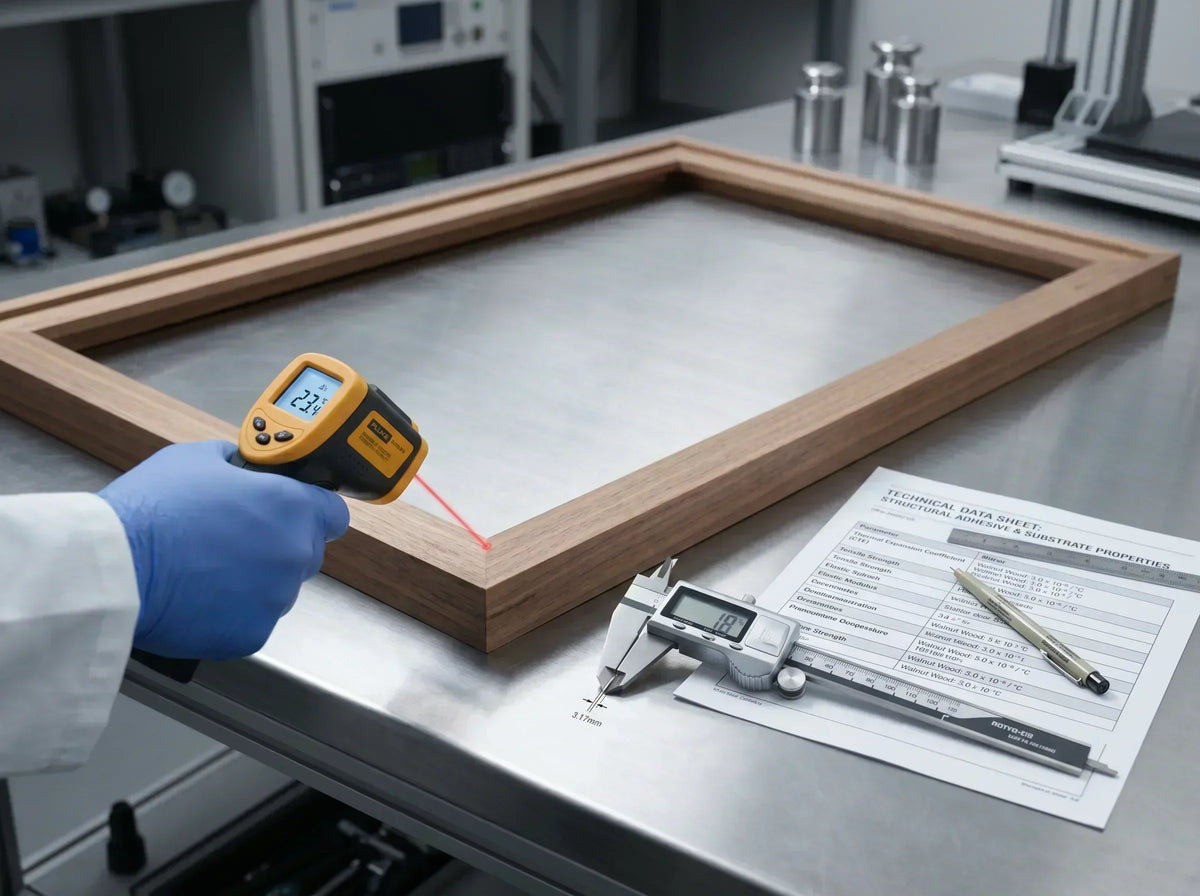
On this page
Quick Answer
Pictures and fine art prints can warp or buckle inside a frame when the glazing, paper, and frame expand or respond differently to temperature and humidity. A small perimeter tolerance—commonly about 1/8 inch—helps prevent the framing package from being compressed against the rigid frame. Archival hinge mounting can also allow paper to move rather than being fixed tightly on every edge.
To the untrained eye, a framed work of fine art appears entirely static. It rests flush against the drywall, serving as a quiet architectural anchor. However, beneath that tranquil surface, the solid wood molding, optical acrylic glazing, and cotton rag substrate can respond differently to changes in the surrounding environment.
If a frame is assembled with insufficient tolerance, expanding or swelling components can press against the frame and one another. The paper may then ripple, bow, or buckle. This guide explains why that happens, why a small expansion gap matters, and how conservation-minded mounting gives paper room to move.
Material Expansion Tolerance Matrix
Different framing materials respond differently to heat and humidity. Understanding those differences is important when building a framing package that does not place unnecessary stress on the artwork.
| Framing Component | Environmental Response | Practical Framing Consideration |
|---|---|---|
| Solid Hardwood Molding | Relatively stable | Forms the rigid perimeter of the framing package. |
| 100% Cotton Rag Paper | Hygroscopic | Can expand and contract as it absorbs and releases moisture. |
| Optical Acrylic Glazing | Thermally responsive | Needs adequate clearance so dimensional change does not create pressure at the frame edge. |

The Physics of Thermal Expansion
When a material warms, its dimensions can change. In a picture frame, the challenge is that the components are not all made from the same material. Wood molding, acrylic glazing, paper, mat board, and backing can each respond differently to temperature and humidity.

Paper adds another variable because it is hygroscopic: its fibers respond to changes in relative humidity. This is one reason conservation framing avoids treating a paper artwork as a rigid component that must remain mechanically fixed on every edge.
The Conflict: Hardwood vs. Acrylic
The perimeter of a frame is relatively rigid, while acrylic glazing can undergo dimensional change as temperature varies. If the glazing is cut with virtually no clearance and becomes tightly constrained by the rabbet, pressure can develop within the framing package.

Acrylic remains a useful glazing material because it is lightweight and available in conservation-grade options. The important point is not to eliminate acrylic, but to size and install the framing components so they are not jammed tightly against the frame.
Mechanical Stress and Substrate Failure
When a framing package is too tight, pressure at the perimeter can contribute to visible distortion. Paper can also cockle or ripple in response to humidity. The result may appear as waves, bows, or localized buckling inside the frame.

Conservation framing therefore aims to support paper without unnecessarily restraining its natural dimensional movement.
Archival Framing and the 1/8-Inch Expansion Gap
A practical framing convention is to provide a small amount of clearance between the glazing package and the inside of the frame rabbet. Around 1/8 inch of total dimensional allowance is commonly used by framers, although the appropriate clearance depends on the glazing material, frame construction, and dimensions.

The goal is simple: the glazing, mat, backing, and artwork should fit securely without being forced tightly into the rabbet.
Why hinge mounting matters
For works on paper, conservation mounting typically avoids permanently adhering the entire sheet to a rigid backing. Appropriate archival hinges can support the artwork while allowing the paper to respond naturally to environmental change.

Why Large Prints Need More Care
As framing dimensions increase, small dimensional changes become more important. A large sheet of acrylic or a large paper artwork has a longer span over which environmental movement can occur, so careful fitting becomes increasingly important.

For a 24×36-inch print, use a frame and glazing system designed for the actual materials involved rather than assuming every component should be cut to an exact zero-clearance fit.
Frequently Asked Questions
Why is my art print waving or buckling inside the frame?
Paper can ripple because of changes in humidity, mechanical constraint, or a framing package that is fitted too tightly. If the glazing and backing have insufficient clearance, environmental changes can add further stress around the perimeter.
What is an expansion gap in framing?
It is a small amount of clearance between the framing package and the inside of the frame rabbet. The allowance gives materials such as acrylic glazing room for dimensional change rather than forcing them tightly against the frame.
Does large-format art warp more easily than small art?
Large works require more careful environmental and mechanical management because dimensional changes occur across a greater span. Proper mounting, suitable glazing clearance, and stable temperature and humidity help reduce the risk of visible distortion.
Final Thoughts: Give Framed Art Room to Move
A well-built frame protects art without unnecessarily constraining it. Appropriate clearance inside the rabbet, conservation-minded mounting, and a reasonably stable indoor environment all help paper artworks remain flat and well supported.

If you are framing a valuable or irreplaceable work on paper, consult a qualified conservation framer for material-specific mounting and glazing recommendations.
Selected Conservation Resources
- Material Physics & Polymers: J. Mark (2007). Physical Properties of Polymers Handbook.
- Museum Conservation: S. Michalski (1991). Paintings: Their Response to Temperature and Humidity.
- Professional Framing: Professional Picture Framers Association (PPFA), conservation and preservation framing resources.

Art worth living with


