Canvas Shade:
Dark Mode
Large Text

Archival Science

Do Art Prints Fade? Pigment Ink, UV Protection & Lightfastness

Learn whether art prints fade, why UV light damages cheap dye inks, how archival pigment inks improve lightfastness, and how to protect giclée prints and wall art from sunlight.

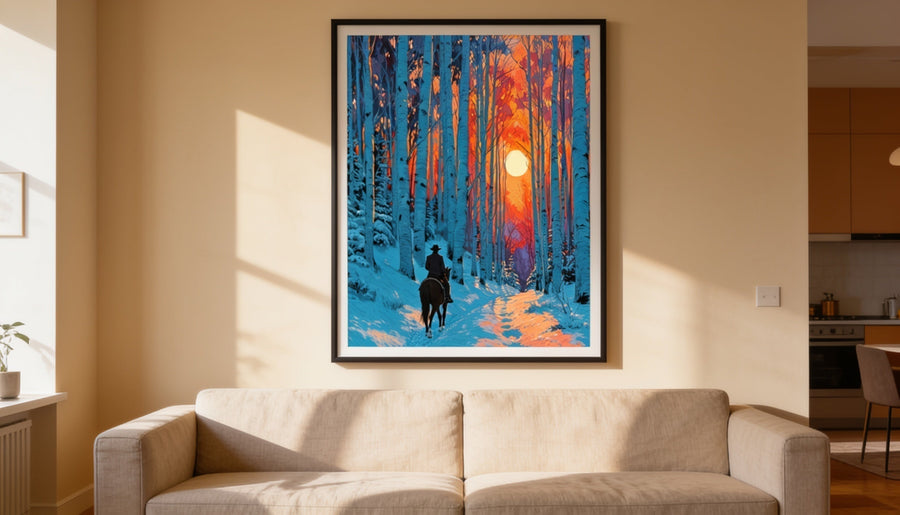
Natural light is one of the best parts of any beautiful home. We naturally want to design our living spaces around large windows and bright skylights because they make a room feel open, fresh, and inviting. However, if you are an art lover, that beautiful natural light is also a double-edged sword. While sunshine can make the deep colors of a landscape glow on your wall, it is also launching a relentless, microscopic attack on the ink itself.

In the commercial art world, this is casually called fading. Most people assume that art naturally fades simply because it gets “old.” But fading is not really about age. It is a direct result of light physically breaking down the color structure inside the print.

Here is the simplest way to think about it:

Color is not just something you see. Color is something that has to survive.

Every ray of sunlight carries energy. If the ink is weak, that energy breaks it apart. If the ink is built from stable pigment particles, it can absorb that energy without collapsing. That is the difference between a poster that looks tired after a few summers and a true archival fine art print designed to stay vibrant for decades.

When we create our artwork, we do not just pick colors because they look beautiful on day one. We choose them because they are physically built to last. That is exactly why we use a specialized system of solid pigment inks instead of cheap liquid dyes, and why every long-term art display should consider UV exposure, lightfastness, paper quality, and protective framing.

Quick Guide to Fading

  • The Enemy is UV Light: Sunlight acts like tiny microscopic missiles. When they hit cheap dye inks, they snap the color bonds and weaken the artwork.
  • Pigments are Armor: Professional pigment inks are made from solid, stable particles. They absorb light energy without breaking apart like fragile dyes.
  • Uneven Fading Looks Weird: Cheap posters often turn pink, yellow, or muddy because different dye colors fade at different speeds.
  • Bigger Art Needs Better Ink: A massive 24x36 print catches a lot of light. At that scale, tough pigment inks are absolutely non-negotiable.

Quick Answer: Do Art Prints Fade?

Yes, art prints can fade, but the speed depends heavily on the ink, paper, glazing, and sunlight exposure. Cheap dye-based posters can fade quickly in bright rooms. Archival pigment prints on cotton rag paper, protected with UV acrylic or museum glass, are designed for much longer color stability.

Print Type Fade Risk Best Protection
Dye-based poster High in sunny rooms Keep away from direct sun
Pigment ink art print Much lower Archival paper + UV glazing
Framed giclée print Lowest when properly displayed Pigment ink + cotton rag + UV acrylic

Simple Rule The best way to prevent fading is to combine archival pigment ink, acid-free paper, UV-protective glazing, and bright indirect light instead of harsh direct sun.

Sunlight illuminating a vibrant fine art print in a modern home
Figure 1: Natural light makes your home feel amazing, but without the right inks, it becomes the primary cause of fading for your wall art.

Why Sunlight Ruins Cheap Art

To understand why a museum-grade print can stay vibrant for decades while a standard poster fades quickly, think of sunlight as a stream of tiny projectiles. These little packets of energy are called photons. When sunlight hits the wall of your living room, it is blasting the art with millions of these tiny projectiles.

Visualization of UV photons bombarding a surface
Figure 2: Sunlight acts like microscopic projectiles, carrying enough energy to weaken the fragile color structure inside standard commercial posters.

Ultraviolet (UV) radiation from the sun is especially dangerous. These specific photons carry so much energy that when they hit a cheap dye molecule, they can snap the chemical bonds holding the color together. Fading is not just a gradual “wearing down” of the artwork. It is the result of the colors being physically broken apart piece by piece.

Standard commercial posters often use liquid dyes that are extremely fragile. They can look bright at first, but they lack the structure to withstand years of light exposure. By switching to high-end pigment inks, we are effectively installing microscopic armor on your walls. If you want to know more about the basics of these two inks, we have a great breakdown of pigment vs dye inks.

Pro Tip If you are comparing pigment ink vs dye ink for wall art, think long-term. Dye can look beautiful at first, but pigment is the better choice when you care about color stability, sunlight resistance, and archival quality.

Pigment Ink vs. Dye Ink: The Simple Comparison

The easiest way to understand fading is to compare the two ink types side by side. Dye inks dissolve into the paper like colored liquid. Pigment inks sit as microscopic solid particles that are much harder for light to destroy.

Feature Dye Ink Pigment Ink
Structure Liquid color molecules Solid microscopic particles
Sun Resistance Lower Much higher
Common Use Cheap posters and quick prints Archival giclée fine art
Failure Mode Fades unevenly Stays more balanced
Best For Temporary decoration Long-term wall art

Interactive Simulator: See the Fading Process

Use the simulator below to fire high-energy UV sunlight at both a cheap dye molecule and a tough pigment crystal. Watch how the dye structure breaks down while the pigment lattice absorbs the energy and stays intact.

Cheap Liquid Dye
Solid Pigment Ink
Color Stability
Ready
Run the test
Dye inks are fragile color molecules. Pigment inks behave more like tiny solid crystals.
What to watch:
Yellow dots = UV photons
Pink structure = dye molecule
Blue grid = pigment lattice

Pigments: The Armor for Your Walls

The core difference between archival pigment inks and cheap mass-market inks is simple. Commercial dye inks are usually made of loosely bound color molecules. They are inexpensive, they can look bright at first, and they are easy to print quickly. But they are also fragile. When UV light hits them over and over again, the color structure slowly breaks apart.

Comparison of organic dye molecules and mineral pigment lattices
Figure 3: Unlike weak commercial dyes, solid pigment particles are built to absorb and survive repeated light exposure.

The pigment inks we use are microscopic solid particles. Think of the difference between a wooden toothpick and a reinforced building. A dye molecule behaves like the toothpick: light energy can snap it. A pigment particle behaves more like a stable structure: it absorbs the energy without collapsing.

That stability is why pigment inks are the foundation of serious giclée printing. The color you see on day one is designed to remain balanced over time, especially when paired with archival paper and UV-protective framing.

Why Posters Turn Pink or Yellow

Have you ever noticed a cheap poster that looks strangely pink, yellow, or muddy after just a few years in a sunny room? This happens because not all cheap dyes fade at the same speed.

The effects of differential photobleaching on a standard CMYK print over time
Figure 4: Cheap dyes often fade unevenly, which can shift the entire image into a strange pink, yellow, or muddy color cast.

In a standard 4-color poster, one color channel may fail faster than the others. When the blues or magentas weaken first, the remaining colors dominate the image. That is why faded posters often stop looking simply “lighter” and start looking completely wrong.

Because we use an advanced 12-color pigment system, our art has a much higher level of tonal stability. More color channels mean smoother transitions, richer depth, and a better chance that the image remains balanced as the years pass.

Testing Ink for 100 Years of Sun

We do not just guess that pigment prints are stable. In the fine art printing world, longevity is tested through accelerated light exposure. Laboratories use intense lamps to simulate long-term sunlight exposure in a controlled environment.

Xenon arc testing chamber simulating UV exposure on fine art paper
Figure 5: Labs use intense UV exposure tests to estimate how inks and papers will behave over many years of real-world display.

These tests help estimate how different inks, papers, and finishes will perform over time. A cheap poster may fail quickly because its color structure is not built for long-term light exposure. A pigment print on 100% cotton rag paper is designed for a completely different standard.

This is why archival printing is not just a marketing term. It is a system: stable pigment inks, archival paper, careful finishing, and smart framing all working together to preserve the image.

Why Large 24x36 Prints Need Extra Protection

We deliberately focus our print collection around a large 24 by 36 inch format. At that scale, the artwork becomes a true focal point in the room. But bigger art also means more surface area exposed to light.

Large 24x36 fine art print receiving direct sunlight
Figure 6: At a large 24x36 size, a print catches more light from the room, which makes archival ink and protective framing even more important.

Because large wall art is such a big target for sunlight, durable pigment ink is essential. You can also help protect these pieces by choosing the right frame. A good frame with UV-protective glazing adds another layer of defense before light ever reaches the paper. You can read more about that in our guide to acrylic vs. museum glass framing.

Display Tip Pigment inks are extremely stable, but no artwork loves harsh direct sunlight all day. For the longest life, choose bright indirect light, use UV-protective glazing, and avoid hanging fine art directly against windows that receive intense afternoon sun.

How to Protect Art Prints from Fading

Fade resistance is not one single material. It is a preservation system. The most stable wall art uses pigment ink, archival paper, controlled light exposure, and protective glazing together.

  • Use pigment inks. Pigment particles are more light-stable than dye molecules.
  • Choose archival paper. Cotton rag and other acid-free fine art papers give ink a stable foundation.
  • Add UV glazing. UV-protective acrylic or museum glass reduces the amount of ultraviolet light reaching the print.
  • Avoid direct sun. Bright indirect light is much safer than hours of intense window light.

Where to Hang Art Safely

You do not have to hide art in a dark room. The goal is to avoid the most aggressive light conditions. A beautiful print can live in a bright space as long as it is not sitting in harsh, direct sunlight for hours every day.

Location Fade Risk Recommendation
Opposite a sunny window Medium to high Use UV glazing and curtains when sun is strongest
Direct afternoon sun High Avoid for fine art when possible
Bright indirect wall Low to medium Best everyday placement for wall art

Common Mistakes That Cause Art to Fade Faster

A lot of fading problems are completely preventable. If you want your artwork to stay beautiful for as long as possible, avoid these common mistakes:

  • Buying dye-based posters for sunny rooms: Dye prints may look bright at first, but they are not the best choice for long-term wall display.
  • Hanging art in direct afternoon sun: Even strong materials last longer when they are not exposed to harsh UV light every day.
  • Skipping UV-protective glazing: Good acrylic or museum glass adds an important shield between the sun and the print.
  • Choosing glossy finishes only for shine: Gloss can create glare and may trap more heat behind glazing.
  • Ignoring the paper: Ink matters, but the paper matters too. Archival cotton rag paper gives pigment inks a stable foundation.

Frequently Asked Questions (FAQ)

Do giclée prints fade?

Giclée prints can fade if exposed to harsh light, but archival giclée prints made with pigment inks on acid-free paper are designed to resist fading far better than cheap dye-based posters.

What is lightfastness?

Lightfastness is a measure of how well a color resists fading or shifting when exposed to light. Higher lightfastness means the print is more stable over time.

How do I protect art prints from sunlight?

Use pigment ink prints, archival paper, UV-protective acrylic or museum glass, and avoid direct afternoon sunlight. Bright indirect light is usually safer for long-term display.

Is pigment ink waterproof or fade-proof?

Pigment ink is more water-resistant and fade-resistant than many dye inks, but no print is completely invincible. Long life still depends on paper, humidity, UV protection, and display conditions.

Why does art fade in the sun?

Sunlight contains UV radiation, which carries high energy. When this energy hits standard dye inks, it can break the chemical bonds that create color, causing the print to fade or shift over time.

Are pigment inks better than dye inks for wall art?

Pigment inks are generally better for fine art prints because they use solid microscopic particles that are much more stable under light exposure than liquid dye molecules.

How do pigment inks stop fading?

Pigment inks are made from solid microscopic particles. These particles are more resistant to UV energy, so they can maintain color far longer than fragile dye-based inks.

Does UV glass or acrylic help prevent fading?

Yes. UV-protective glazing adds another layer of defense by blocking most harmful ultraviolet light before it reaches the print.

Does the finish of the print matter for sun damage?

Yes. A premium matte finish can help reduce glare and heat buildup compared with glossy finishes, supporting better long-term viewing and preservation.

Do art prints fade over time?

It depends entirely on the ink and paper used. Art prints made with cheap liquid dye inks on standard paper can start fading visibly within 1–3 years, especially in rooms with natural light. Art prints made with archival pigment inks on acid-free cotton rag paper are engineered to resist UV fading for 70–100+ years under normal display conditions. All Art Academi prints use professional pigment inks — never dye inks.

How do I stop art prints from fading?

Four things protect art prints from fading: (1) Start with pigment-based archival inks — these are physically more stable than dye inks. (2) Use acid-free, archival paper — acidic paper yellows and degrades regardless of the ink. (3) Frame with UV-protective glass or acrylic — this blocks 98%+ of harmful ultraviolet light before it reaches the print. (4) Avoid hanging directly opposite windows — indirect or ambient light is far gentler than direct sunlight.

How long do art prints last?

A cheap poster printed with dye inks on acidic paper may show visible fading within 2–5 years. A professional giclée print using pigment inks on 100% cotton rag paper, displayed away from direct sunlight and framed with UV glass, can maintain its colors for 70–100+ years. The Wilhelm Imaging Research institute, which independently tests print longevity, has certified certain pigment/paper combinations for over 200 years of projected display life.

Are Art Academi prints fade-resistant?

Yes. All Art Academi fine art prints are produced using professional archival pigment inks — never cheap liquid dyes — on acid-free, heavyweight matte paper. This combination is specifically engineered for long-term wall display. We deliberately avoid glossy or satin finishes because they offer less UV stability than premium matte surfaces.

Final Thoughts: Built to Last

Light should be beautifully celebrated in your home, not feared. Once you understand how sunlight breaks down cheap posters, you can choose artwork that is actually built to survive in a bright, lived-in room.

A beautifully lit, permanent fine art print anchoring a peaceful home
Figure 7: By using solid pigment inks, you can confidently enjoy artwork in bright, beautiful rooms with far less worry about fading.

When you invest in archival pigment prints, you are not just buying a temporary decoration. You are choosing a print system designed for long-term color, stability, and beauty. The ink matters. The paper matters. The frame matters. Together, they turn a beautiful image into a lasting part of your home.

Close up of a vibrant, unfading fine art print
Figure 8: Solid pigments provide a beautiful legacy of color designed to last.

Are you ready to experience the brilliance of permanent color? Explore our collection of 24x36 matte fine art prints and find a masterpiece built to last a lifetime today.

Selected Technical References

  1. Principles of Color Technology: R. S. Berns (2000). Billmeyer and Saltzman's Principles of Color Technology. An in-depth look at color stability and material behavior.
  2. ASTM International: Standard Practice for Operating Xenon Arc Light Apparatus for Exposure of Nonmetallic Materials (G155). A benchmark for accelerated light exposure testing.
  3. Photochemistry of Pigments: G. Wyszecki & W. S. Stiles (1982). Color Science: Concepts and Methods, Quantitative Data and Formulae. Explaining the relationship between light, color, and perception.
Back to blog

Best Sellers

View collection

Testimonials

( 102 )
★★★★★
Write a Review
★ ★ ★ ★ ★

You should experience his work

Artwork reviewed by Danya
I loved all of Kevin's work that I saw but bought my favorite, Crimson Moon. It's extraordinary! The detail, dimension, depth and color ...
D
Danya
Longmont, CO
★ ★ ★ ★ ★

How great!

Artwork reviewed by Releia
I love the print I received. The artwork is beautiful and it’s printed on beautiful thick paper with a matte finish. I can’t wait to fra...
R
Releia
Green Cove Springs, FL
★ ★ ★ ★ ★

It’s wonderful!

Artwork reviewed by Allan
The image seems to jump off the thick, museum quality paper the work is printed on. The warm colors are strong and vibrant, and every in...
A
Allan
Jefferson City, MO
★ ★ ★ ★ ★

Absolutely beautiful

Artwork reviewed by Charlotte
Color and details. Now just trying to find the perfect mat and frame.
C
Charlotte
Las Vegas, NV
★ ★ ★ ★ ★

Absoutley nothing Like It!

Artwork reviewed by Mark
Absoutley nothing Like it! I guess that word works. Love it!! And love everything about it !! Now those words work perfectly!! Absolutle...
M
Mark
Milford CT
★ ★ ★ ★ ★

Marvelous!

Artwork reviewed by Fabienne
Les couleurs, la lumière!
F
Fabienne
Angers, France
6 / 102 reviews